Plantar Fasciitis
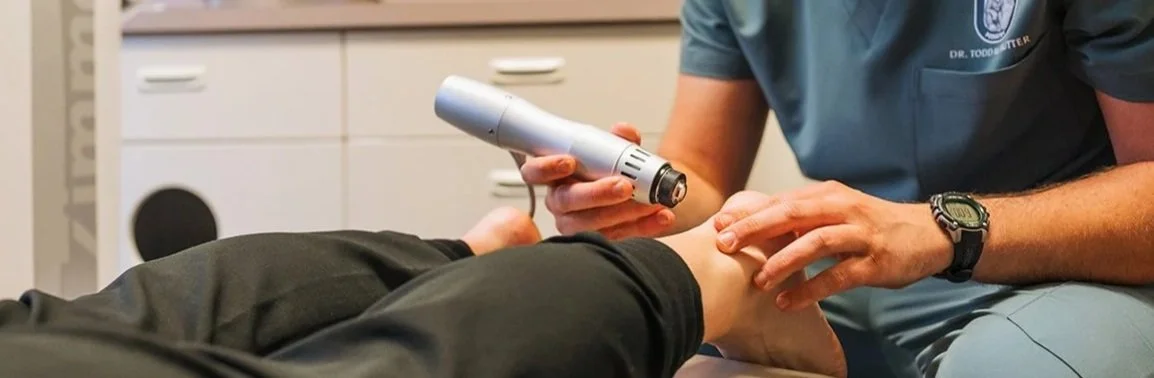
Stabbing heel pain that makes your first steps in the morning feel like walking on broken glass. MLS laser penetrates deep into the inflamed band of tissue along the bottom of your foot, reducing pain and swelling without injections or downtime. Shockwave therapy delivers targeted acoustic energy directly into the damaged tissue, breaking up scar tissue and triggering your body's own healing response — often providing lasting relief after just 3–5 sessions.
-
Plantar fasciitis is the most common cause of heel pain. The plantar fascia is a thick band of tissue that runs along the bottom of your foot, connecting your heel to your toes. When it's repeatedly stressed, tiny tears form at the point where it attaches to the heel bone.
The classic sign is sharp pain with your first few steps in the morning, or after sitting for a long time. Contributing factors include standing for long hours, sudden increases in walking or running, tight calf muscles, flat feet or high arches, and being overweight.
-
Your doctor can diagnose plantar fasciitis during a physical exam by pressing on a specific point at the base of your heel where the pain is most intense. Bending your big toe upward while pressing can also reproduce the pain.
X-rays may be taken to rule out a stress fracture or to look for a heel spur (a bony point on the heel). Heel spurs are common but are not actually the cause of the pain — the fascia tear is. MRI or ultrasound may be used if the diagnosis is unclear.
-
The good news: about 90% of cases resolve within 12 months with conservative treatment. The most important steps are daily stretching of the calf and the bottom of the foot, wearing supportive shoes, and using heel cushions or custom orthotics.
For cases that don't improve, we offer shockwave therapy and MLS laser therapy — both effective, non-invasive in-office options. A cortisone shot can provide quick relief but has limits on how often it can be used. PRP injections (using your own blood) are a strong option for chronic cases. Surgery is rarely needed and only considered after 12 months of treatment.