Diabetic Foot Ulcers
An abnormal gait (walking in a way that puts pressure on the heel) can cause pain. Continually doing high-impact exercise like running, jogging, and jumping, especially on hard surfaces, commonly causes heel pain. Wearing ill-fitting or unsupportive shoes can also cause heel pain or make it worse.
One of the most likely causes of pain on the bottom of your heel is plantar fasciitis. This condition develops when inflammation affects the plantar fascia, a piece of connective tissue that runs under your foot.
-
Diabetic foot ulcers develop when small injuries or pressure sores go unnoticed and unhealed due to neuropathy (loss of protective sensation) and poor circulation. Without the ability to feel pain or pressure, minor wounds can deepen into serious ulcers before the patient is even aware of them.
Common triggers include ill-fitting shoes, stepping on an object, excessive callus buildup, dry skin that cracks, or simply the pressure of walking. Once an ulcer forms, impaired circulation slows healing and increases infection risk. Diabetic foot ulcers are the leading cause of non-traumatic lower limb amputation — but most are preventable with proper care.
-
Ulcers are classified by depth and infection status using the Wagner or University of Texas grading systems. Your doctor will probe the wound to assess how deep it goes and whether it involves tendon or bone.
X-rays check for bone infection (osteomyelitis) and Charcot changes. MRI is the most accurate test for osteomyelitis. Vascular studies (ABI — ankle-brachial index) assess circulation. A wound culture is taken if infection is present to guide antibiotic selection.
Blood work includes HbA1c (long-term blood sugar control), CBC (infection markers), and albumin (nutritional status, which affects healing).
-
Offloading is the most critical intervention — removing pressure from the ulcer with a total contact cast, removable boot, or specialized diabetic footwear. Without offloading, ulcers will not heal regardless of other treatment.
Wound care includes regular debridement (removal of dead tissue), moisture-balanced dressings, and infection management with oral or IV antibiotics as needed.
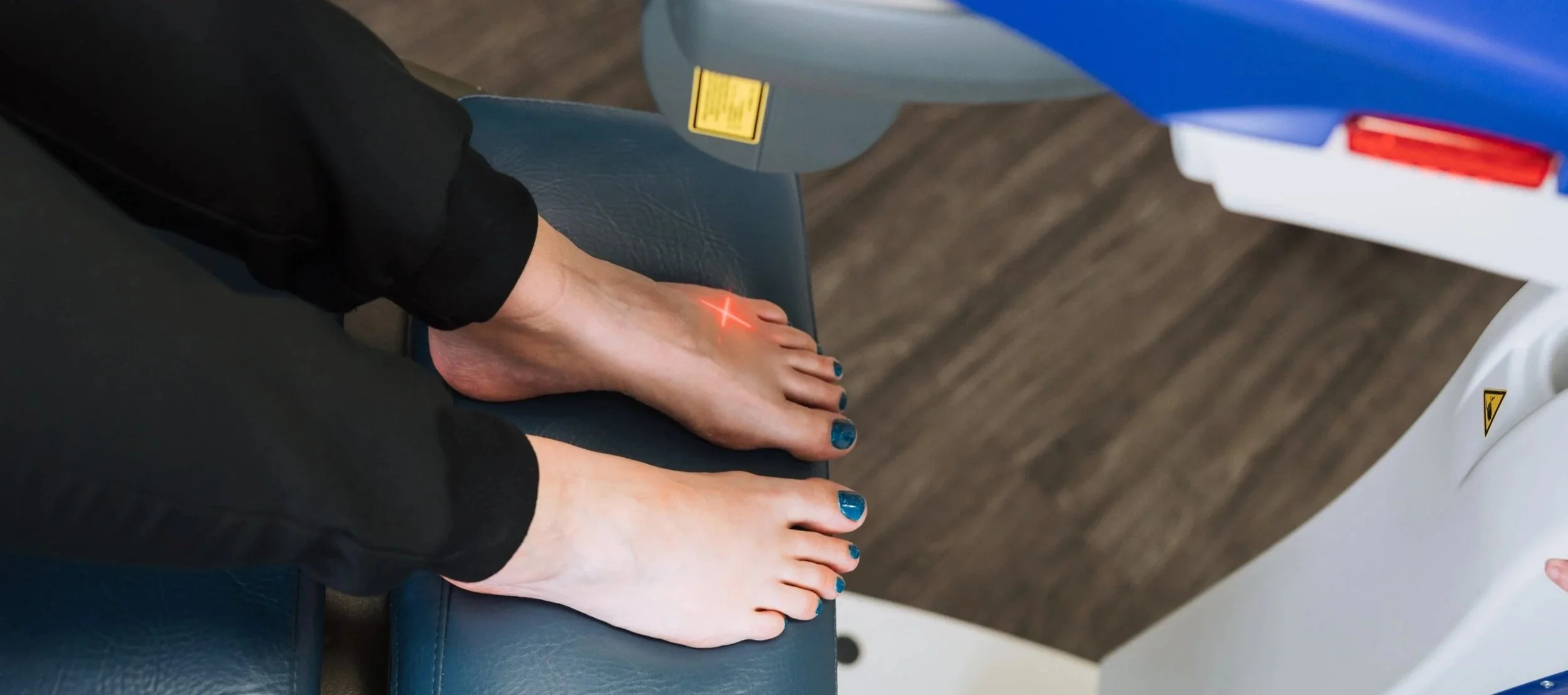
MLS laser therapy promotes wound healing and is sometimes used as an adjunct. Advanced wound care products (growth factors, skin substitutes, hyperbaric oxygen) are used for non-healing wounds.
Surgical intervention may be required to remove infected bone, drain abscess, or reconstruct the foot. Vascular surgery referral is made when circulation is critically impaired.