Chronic Ankle Instability
Recurring aching, weakness, or soreness around the ankle from old injuries that never fully healed. Shockwave accelerates tissue regeneration in ligaments and tendons, restoring stability and reducing the chronic pain cycle that limits your daily activity.
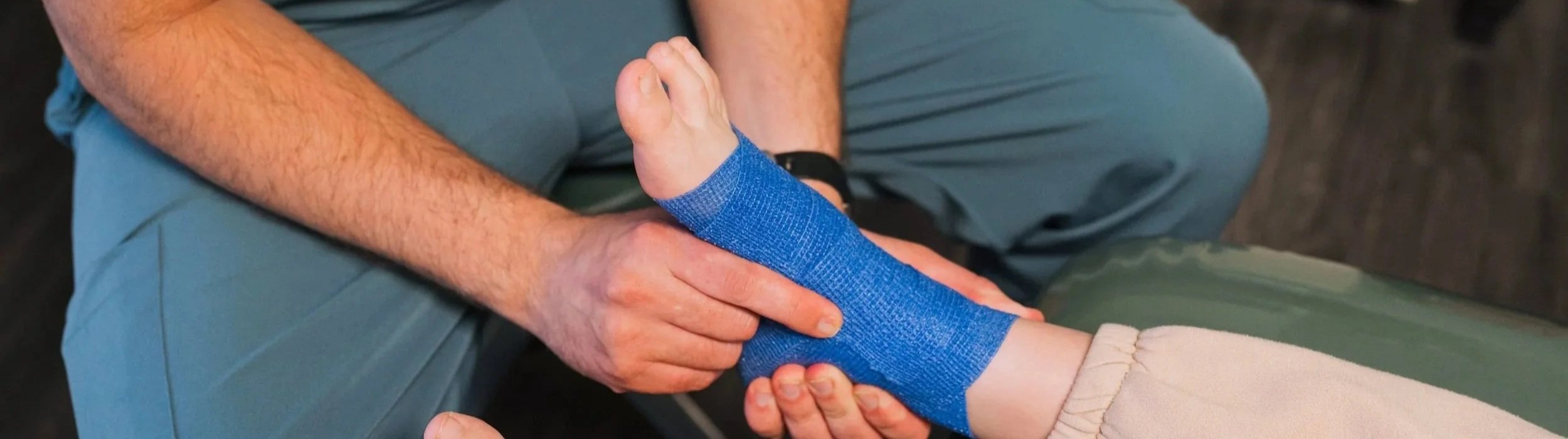
-
Chronic ankle instability develops when the ligaments on the outside of the ankle are stretched, torn, or never fully healed after one or more sprains. The ankle feels loose, unpredictable, or like it will "give out" — especially on uneven ground or during activity.
It's most common in people who have had multiple ankle sprains that weren't fully rehabilitated. The body may partially heal the ligament, but it never regains its original strength or tightness. Athletes are at high risk, but it affects anyone who has had a poorly treated sprain.
-
Your doctor will test the stability of your ankle using specific hands-on maneuvers — the anterior drawer test (pulling the foot forward) and the talar tilt test (tilting the heel inward) — to assess how much the ligaments are letting the ankle move beyond its normal range.
Stress X-rays may be taken with the ankle held in a specific position to compare how much it shifts compared to normal. MRI is ordered when there is concern about additional damage to cartilage, tendons (especially the peroneal tendons), or other ligaments inside the joint. An ankle that is unstable for more than 3 months despite treatment warrants imaging.
-
Many cases respond to structured physical therapy focused on balance (proprioception) training, peroneal muscle strengthening, and neuromuscular retraining. Ankle bracing during activity is used while rehabilitation is underway.
For patients who don't improve with conservative care — or who continue to sprain repeatedly — surgery is a reliable option. The Brostrom-Gould procedure tightens and repairs the stretched ligaments using the patient's own tissue. It is an outpatient procedure with a full return to sport in about 4–6 months.
MLS laser therapy can reduce pain and swelling during the rehabilitation phase.
-
[Mostly Covered]
Office visits, imaging (X-ray, MRI), and physical therapy are covered.
Ankle bracing is covered as durable medical equipment.
Surgery (Brostrom-Gould procedure) is covered when conservative care has failed and instability is documented. Custom orthotics for structural contributors may require prior authorization. MLS laser therapy is cash-pay.